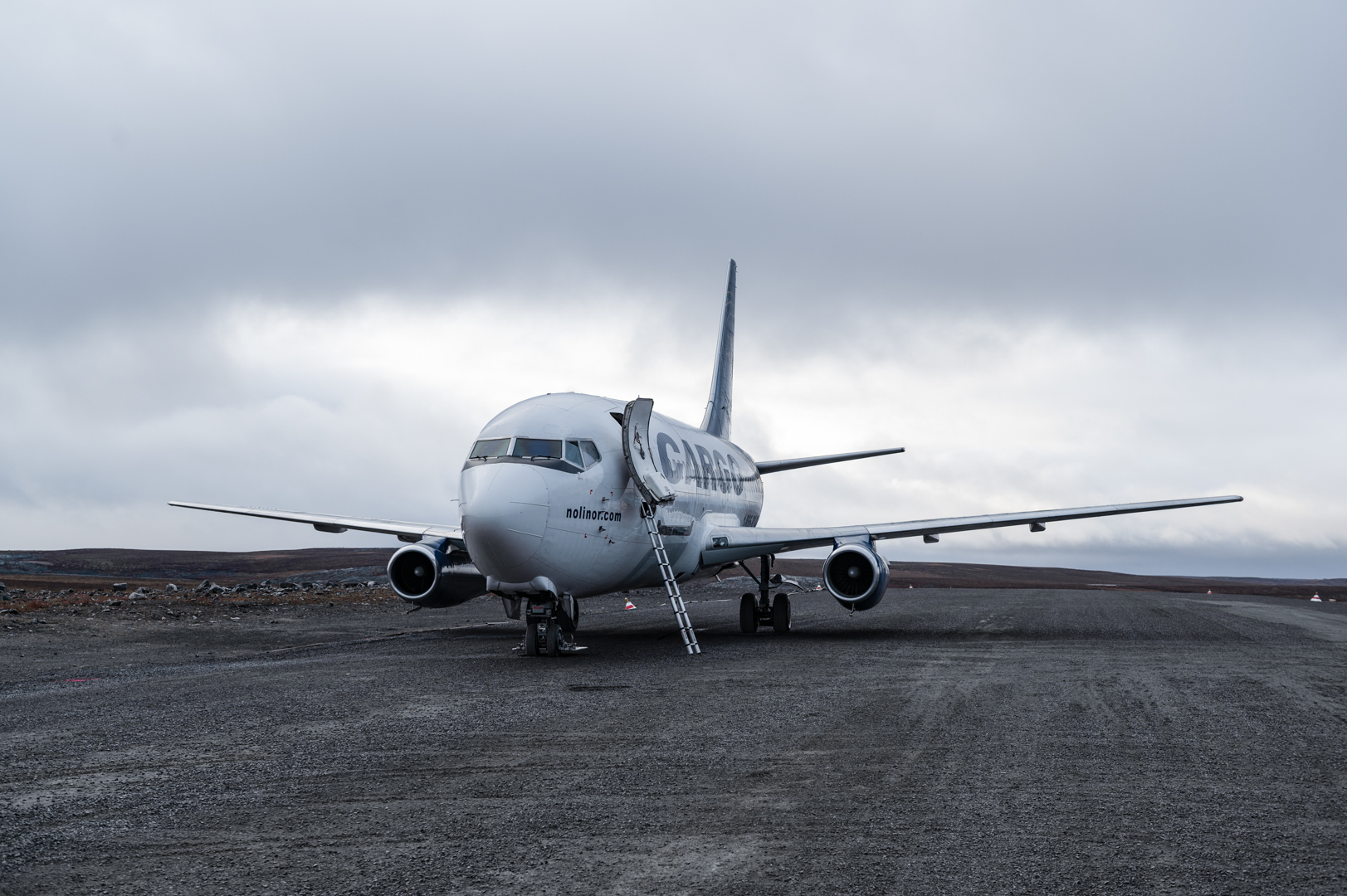
At Nolinor Aviation, we’ve been navigating the skies of northern Canada for decades, relying on our fleet of Boeing 737-200s to connect remote communities and support vital operations in some of the harshest environments on the planet. As experts in Arctic aviation, we’ve seen firsthand how infrastructure choices impact reliability, safety, and cost. In an era where climate change and economic pressures are reshaping the North, gravel airstrips stand out not as a relic of the past, but as a forward-thinking solution. Here’s why gravel airstrips offer unmatched advantages and why they’re poised to remain a cornerstone of northern Canadian aviation.
Technical Benefits of Gravel Runways
Imagine building essential infrastructure that withstands the brutal Arctic winters while staying within budget and supporting local communities. Gravel runways do just that, emerging as the top choice for tackling northern Canada’s environmental challenges like permafrost thaw, extreme weather, and logistical hurdles. They are the cheapest option for construction and upkeep, with a standard 5,500-foot by 150-foot gravel airstrip costing around $20 million to build, significantly less than paved or alternative surfaces. This affordability comes from using locally sourced materials and simple construction methods that avoid the need for expensive, specialized imports.
What makes gravel even more appealing? Maintenance is straightforward and can be handled locally with general heavy machinery like graders, dump trucks, and crushers. This equipment isn’t just for the runway; it can be repurposed for community needs, such as building roads, supporting mining operations, or other infrastructure projects. This multi- use benefit maximizes the value of your investment, fostering self-sufficiency in remote areas and empowering local economies.
Picture this: as permafrost thaws and the ground shifts, what happens to a rigid runway? It cracks and fails, leading to costly downtime. Gravel runways, however, handle these conditions with ease, offering the flexibility that other surfaces simply can’t match. You can quickly regrade them to fix subsidence or heaving caused by thaw, sidestepping those catastrophic issues. Backing this up is the “Due North” report from the Canadian Climate Institute, which spotlights gravel as a smart adaptation strategy on page 31, it notes: “Other important adaptations to consider… include planned failure, relocating airports, building gravel instead of paved runways…” to cut costs in a changing climate. Real-world case studies from Nunavik and northern Saskatchewan demonstrate how this approach delivers major direct and indirect savings. Plus, gravel’s porous design naturally improves drainage, preventing water buildup that could worsen thawing in our warming world. If you’re planning aviation infrastructure in the North, gravel isn’t just practical it’s a resilient powerhouse that works with the environment, not against it.
Operational Shortcomings of Alternative Technologies
But what about the alternatives? You might wonder if modern options like asphalt paving, metal panels, or chemically stabilized aggregates could outperform gravel. The reality, based on real-world examples, tells a different story, especially in the face of northern environmental stressors like permafrost thaw. Consider Iqaluit International Airport: its asphalt runway has endured severe issues from thawing permafrost, including cracking, warping, and subsidence that demanded $300 million in repairs and improvements between 2014 and 2017 just to keep it operational. Asphalt traps heat, speeding up underlying thaw and causing uneven settling that creates ongoing safety risks and high annual maintenance costs, potentially reaching millions in extreme scenarios.
Metal panels, popular in military applications, aren’t much better for civilian use in the North. They come with massive upfront costs, up to $100 million for a comparable 5,500- foot by 150-foot runway, and present logistical nightmares in remote locations. Installation demands specialized equipment, and ongoing maintenance must tackle issues like misalignment or corrosion from harsh Arctic weather, with replacement parts hard to source locally. Plus, they lack full approval from Transport Canada for civilian operations, introducing regulatory risks and potential downtime.
As for chemically stabilized aggregates, they’ve shown promise as reducers of foreign object debris (FOD, those loose particles like stones or dust that can get kicked up and damage aircraft during takeoff or landing). However, it’s primarily a FOD reducer and doesn’t fully guard against larger aggregates, with the underlying surface still being gravel-based. Thus, operators are unlikely to risk new jets on these surfaces due to the potential for aggregate ingestion, where loose particles get sucked into the engines, causing severe damage. For context, a CFM56 engine (a common jet engine type used on aircraft like the Boeing 737- 800) costs approximately $10-11 million USD, and such an incident could ground the aircraft, incurring millions more in logistics, salaries, and lost revenue for remote rescue operations. Maintenance involves reapplying non-local chemicals, which drives up costs and raises environmental concerns. These shortcomings highlight why alternatives often lead to more headaches than solutions in northern aviation.
There’s also the myth that upgrading to alternatives would allow newer jets to better serve northern communities. This push is a false narrative: larger aircraft aren’t suited to the market due to low passenger volumes in remote areas, where small, spread-out populations limit demand and revenue potential. Even if all 141 remote northern airports were hypothetically paved, no air carrier would rush to operate larger jets because the economics simply don’t add up. The real solution? Rely on proven gravel-capable aircraft like our Boeing 737-200s and regional turboprops: they’re efficient for northern routes, fully capable of landing on gravel, and don’t require massive investments in paving. This approach keeps operations reliable and cost-effective without chasing unattainable upgrades.
Gravel Runways as a Strategic Asset for Northern Regions
In summary, gravel runways deliver the cheapest, most adaptable infrastructure for northern Canada’s environmental challenges, featuring local maintenance with repurposable machinery that benefits communities and superior resilience to permafrost thaw as recommended in the “Due North” report for cost-effective climate adaptation, including building gravel instead of paved runways. Alternatives like asphalt, metal panels, and stabilized aggregates falter due to high costs, maintenance complexities, and vulnerabilities, as seen in Iqaluit’s $300 million permafrost-related repairs. The idea of paving for newer jets overlooks low-demand realities, making reliable gravel-capable aircraft like the Boeing 737-200 and turboprops the path to affordable, sustainable access in over 140 remote communities. Gravel isn’t a temporary fix it’s a strategic asset that boosts resilience, drives economic development, and ensures essential services without unnecessary environmental disruption.
At Nolinor, we’re committed to innovative yet practical solutions that keep the North connected. Gravel runways aren’t just infrastructure they’re the foundation of resilient operations. If you’re involved in northern aviation or infrastructure planning, let’s discuss how we can collaborate to build a stronger future. Contact us today!
References
- Canadian Climate Institute. (2022). Due North: Facing the costs of climate change for northern infrastructure. https://climateinstitute.ca/reports/due-north/
- Office of the Auditor General of Canada. (2017). Report 6—Civil aviation infrastructure in the North—Transport Canada. https://www.oag- bvg.gc.ca/internet/English/parl_oag_201705_06_e_42228.html
- Prentice, B. E., & Adaman, M. (2024). Air connectivity and airport infrastructure in northern Canada. The School of Public Policy Publications, 17(1). https://doi.org/10.11575/sppp.v17i1.78185
- Rock to Road. (2018, February 6). Iqaluit experience: A look at the $300M Iqaluit Airport project. https://www.rocktoroad.com/iqaluit-experience-5727/
- The Toronto Star. (2019, July 4). Canada’s permafrost is turning to mud. Here’s why. https://projects.thestar.com/climate-change-canada/nunavut/