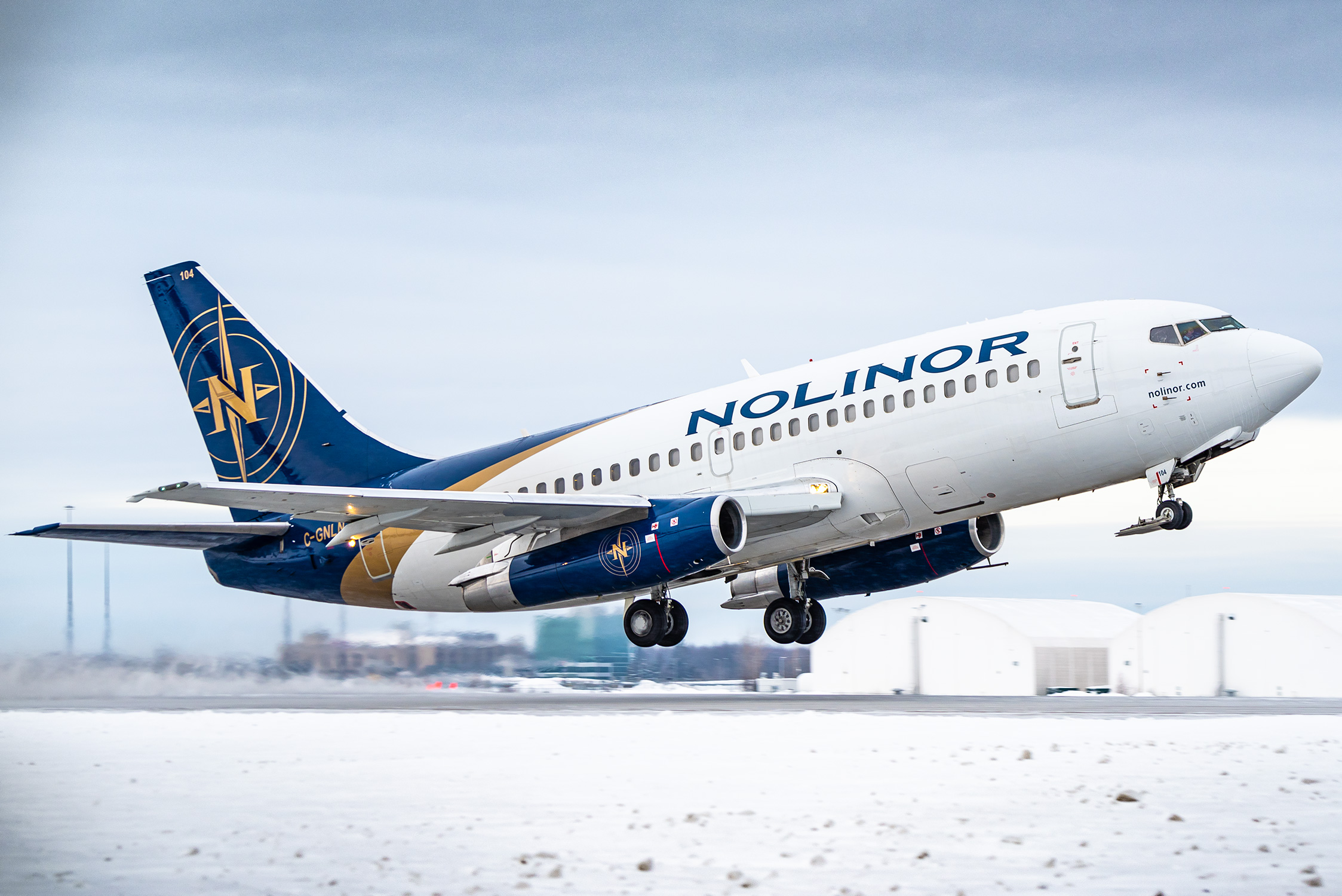
The dominant narrative in aviation is that older aircraft are, by definition, nearing retirement. Calendar age is routinely treated as a proxy for safety, reliability, and economic relevance. In industrial and charter aviation, this assumption is not just inaccurate, it is operationally misleading. The Boeing 737-200 is a clear example. When examined through the correct lens, this aircraft still has at least two decades of viable operational life ahead. Treating it as obsolete based on age alone reflects a misunderstanding of how aircraft lifecycle actually works.
This article challenges that misconception by focusing on measurable drivers of aircraft retirement: flight hours, utilization rates, manufacturer support, and supply-chain control. The argument is grounded in operational reality, not sentiment
Aircraft retirement is not driven by age
Aircraft are not retired because they are old. They are retired because they exhaust their certified utilization limits, primarily flying hours, become economically mismatched to their mission, or lose technical and regulatory support. The year an aircraft was built is largely irrelevant once it enters service.
What ultimately governs aircraft life is cumulative utilization. Airframes are certified with defined flight-hour limits, supported by inspection programs designed to manage fatigue progression over time. An aircraft flying 2,500 to 3,000 hours per year will reach those limits far sooner than one flying a fraction of that amount.
This distinction explains why many relatively young aircraft operated by scheduled airlines have already been retired. High utilization airline networks drive intense annual flight-hour accumulation, pushing aircraft toward their structural limits quickly, regardless of delivery date.
By contrast, charter aircraft flying with low annual utilization compared to scheduled airlines consume structural life at a much slower pace. This difference is decisive.
Nolinor Aviation illustrates this reality clearly. Nolinor has the world’s largest Boeing 737- 200 fleets, despite their year of build being near 1970. Yet these aircraft are not approaching retirement. Based on remaining certified utilization and current operating profiles, the fleet retains multiple decades of potential service life. The calculation is straightforward: remaining utilization divided by realistic yearly flying. Age does not retire aircraft. Age alone does not retire aircraft; cumulative utilization and supportability do.
Why the Boeing 737-200 still fits industrial aviation
Industrial aviation operations impose different constraints than scheduled passenger networks. They prioritize payload flexibility, speed, range, and operational independence over seat-mile efficiency. In this context, the Boeing 737-200 remains technically and operationally relevant.
Beyond lifecycle considerations, the 737-200 continues to outperform modern alternatives in northern and remote operations. With a passenger capacity of 119, it exceeds its closest practical competitors for gravel runways such as the RJ100, Dash 8 Q400, or ATR 72. It also offers roughly twice the range, a decisive advantage for long sectors to remote sites, particularly where jet fuel availability is limited or nonexistent.
The aircraft is also significantly faster, which directly reduces travel time. For industrial customers, this matters economically. Employees are paid during transit, and shorter travel times translate directly into more productive time on site. In absolute terms, the 737-200 delivers approximately 1,400 km more range than its closest competitor, materially expanding operational reach.
Its defining advantage remains flexibility. The aircraft can be configured in combi mode, most commonly with two pallets and 77 passengers, enabling the simultaneous transport of personnel and approximately 11,000 lbs of cargo. No other aircraft in this category combines speed, range, payload, and combi capability at this scale for northern industrial missions.
Nolinor’s operating model involves lower annual flight hours than airline operations. Thi significantly slows the consumption of certified airframe life. While gravel runways and Arctic conditions introduce additional maintenance demands, they do not inherently accelerate pressurization fatigue in the way high-frequency short-haul flying does.
As a deliberate reliability strategy, Nolinor invests approximately 20 maintenance man- hours per flight hour, well above industry averages. This is not inefficiency. It is a deliberate strategy aligned with operating reality. Reduced inspection intervals, increased borescope inspections, and proactive structural monitoring ensure that wear is detected early and managed methodically.
This approach is enabled by full vertical integration and deep in-house expertise. Heavy maintenance, structural repairs, and engineering decisions are handled internally rather than outsourced. The result is control over aircraft condition rather than reactive dependence on external capacity.
In many organizations, aircraft are retired when complexity becomes inconvenient. At Nolinor, complexity is managed by design.
Boeing’s long-term support of legacy aircraft programs
A key enabler of long-term operation is continued manufacturer support. There is persistent confusion about what this actually means once production has ended. Support does not imply new aircraft or mass-produced parts. It means engineering continuity.
Boeing continues to support the 737-200 through end-of-life. This includes access to approved engineering data, structural repair methodologies, service bulletins, certification support, and technical consultation. These elements are essential. Without them, no aircraft can remain compliant, regardless of how well it is maintained.
Boeing has been explicit in its intent to support operators until their aircraft reach end-of- life. This commitment prevents artificial retirement driven by documentation gaps or certification dead ends rather than genuine airworthiness limitations.
For Nolinor, this support directly enables continued operations in demanding industrial environments. Boeing’s technical backing ensures that emerging issues can be addressed with approved solutions, maintaining regulatory continuity and operational confidence. This dynamic is examined in more detail in this article.
Manufacturer support, when properly understood, is not symbolic. It is a structural pillar of aircraft longevity.
Parts availability: a controlled variable, not a constraint
Parts scarcity is often cited as the primary risk facing legacy aircraft. In reality, scarcity only becomes limiting when operators lack control over their maintenance and supply chain.
Nolinor has addressed this challenge through a deliberate combination of partnerships, asset acquisition, and vertical integration. On the engine side, long-term availability is secured through conservative risk management, including additional engine acquisition, sustained relationships with selected overhaul facilities, and tighter inspection regimes. Reduced intervals and increased borescope use, particularly in gravel operations, mitigate the risk of unplanned removals.
On the component side, vertical integration is decisive. The introduction of an in-house machine shop allows components that are difficult or impossible to source externally to be manufactured internally under approved processes. This shifts parts availability from an external dependency to an internal planning function.
In this context, scarcity becomes a strategic variable rather than a hard limit. Operators who control their maintenance ecosystem are structurally advantaged over those who rely on open- market availability.
Targeted modernization reduces obsolescence risk
Long-term viability does not require transforming the aircraft. It requires selectively removing failure-prone legacy systems where modern equivalents materially improve reliability and supportability.
A clear example is cockpit instrumentation. As electromechanical Attitude Director Indicators and Horizontal Situation Indicators became increasingly scarce, Nolinor chose to eliminate the dependency entirely. A major investment was made in a world-first avionics upgrade on a Boeing 737-200, replacing legacy gyro-based instruments with solid-state LCD displays.
The upgrade includes electronic flight instruments, inertial navigation systems, LPV-capable flight management systems, and ADS-B compliant transponders. This architecture simplifies troubleshooting, reduces downtime, and improves navigation capability in remote environments while eliminating vibration-sensitive components ill-suited to gravel operations.
This is not modernization for optics. It is risk reduction through simplification. Further details are
available in this article.
Conclusion: dismissing the 737-200 is an operational mistake
The assumption that the Boeing 737-200 is nearing retirement is not supported by data, engineering logic, or operational evidence. It reflects a misunderstanding of aircraft lifecycle and an overreliance on calendar age as a decision metric.
When evaluated correctly, based on flight hours, utilization rates, manufacturer support, and supply-chain control, the aircraft still has at least two decades of viable operational life ahead in industrial aviation operations.
For operators who understand their mission profile and control their maintenance ecosystem, the Boeing 737-200 remains a rational, defensible, and strategically sound platform. Dismissing it based on age alone ignores how aircraft are designed, certified, and sustainably operated.